Product advantages
1. Technical design advantages: The overall design is divided into compartments for isolation, and the left and right digital and analog functions are independently stabilized (with more than 20 stabilizing chips). The PCM1794x4 adopts MSD++parallel technology, and the analog part adopts NOS IV technology+current transmission technology+MCS buffering technology, combined with unique tuning techniques for sound output reference level.
2. Tuning advantages: This decoder utilizes technology to design the entire system before tuning. Tuning the analog part is a technical task, and it is not easy to tune the NOS IV and current transmission+MCS buffering technologies well. It requires step-by-step tuning and comprehensive tuning. The sound of NOS IV is quite charming, and the current transmission technology is transparent and atmospheric. You can take a look at the current transmission amplifiers in my store for more information.
3. Price advantage: The advantage mentioned here is not being cheaper than others, but rather being priced lower based on cost and performance comparison. This decoder is carefully designed with high cost, which is different from decoders that only know how to respond.
4. Gameplay advantages: Equipped with a built-in hardware transcoding chip, it can receive DSD signals and transcode them into PCM signals for PCM1794 decoding. This way, PCM1794 can also use DSD signals (coaxial and fiber support DSD64, USB and I2S support DSD64-DSD512). The built-in receiving chip also supports frequency up and down functions, with a frequency range of 44.1K-768K. When needed, set the corresponding sampling frequency according to your preferences. Is this feature probably the only one among the PCM1794 decoders on the market?
Product material Description:
Use Two 35W encapsulated toroidal transformers
High precision temperature compensated crystal oscillator
Panel button control+remote control
The function of this product is to decode digital audio signals into analog signals for use in power amplifiers/ear amplifiers/active speakers.
Appearance: 32 centimeters wide, 24.8 centimeters deep, and 7 centimeters high. (Excluding dimensions of machine legs and RCA protrusions)
Weight: about 6kg ,
all aluminum shell
Input methods: coaxial, fiber optic, I2S,USB, There are 5 types of Bluetooth (the standard ones do not include Bluetooth and USB), which can be switched through the buttons on the panel. The high-end ones with remote control can be remotely controlled. USB card is an Italian solution card. If you want to upgrade to XMOS XU316 card, add 200.
Decoding chip: Four PCM1794 chips, two for each channel, using MSD++parallel technology to improve separation and dynamics, with higher sound density and better details.
Power supply mode: 220V 115V
Output method: CMC816 gold-plated RCA terminals and gold-plated XLR balanced output, buffer circuit without coupling capacitance, and direct output through resistors.
Sound characteristics: The analog part IV does not use operational amplifiers, but instead uses our own designed NOS IV technology. The LPF is equipped with a current transmission module, creating a unique design that is both pleasant and atmospheric. The details, separation, dynamics, and sound density are excellent, and the three frequencies are just right. The silky sound and jumping notes make people feel comfortable and durable. Perhaps you will be fascinated by it! It can be said to be a reference level sound, not expensive, and sounds much better than other high spec digital flavored ES9038/ES9039/AK4499!
Output level: RCA2V, balanced 4V.
Supported formats: Coaxial fiber supports PCM 192K and below, DSD (Dop 2.8M), I2S supports PCM 44.1-384K, DSD 64-512 (Native mode), the higher the required cable bit rate, otherwise only low bit rates can be used. The default USB card supports PCM16-24-bit 44.1-192 KHz, DSD64-DSD512 (requires playback software support, otherwise only low bit rates can be used), Bluetooth supports 96K and below.
package include : finished DAC*1 remote control*1
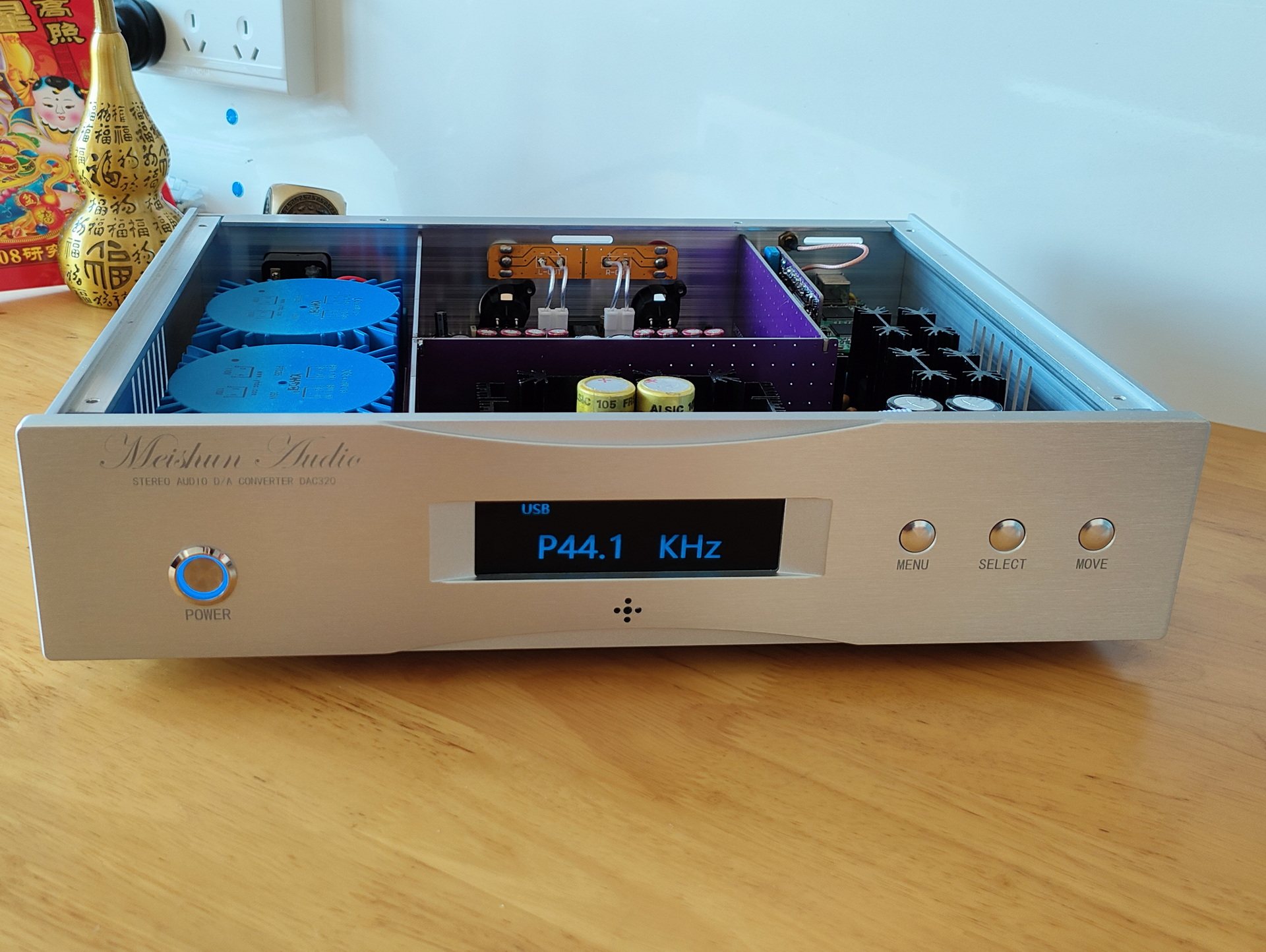
Panel button description: The left side is the power switch, the right side has three buttons. MENU is the function button, short press is mute/play, long press for more than 1 second can bring up the menu for screen dimming and up conversion settings (operated in conjunction with the MOVE button), SELECT is the signal input selection switch.
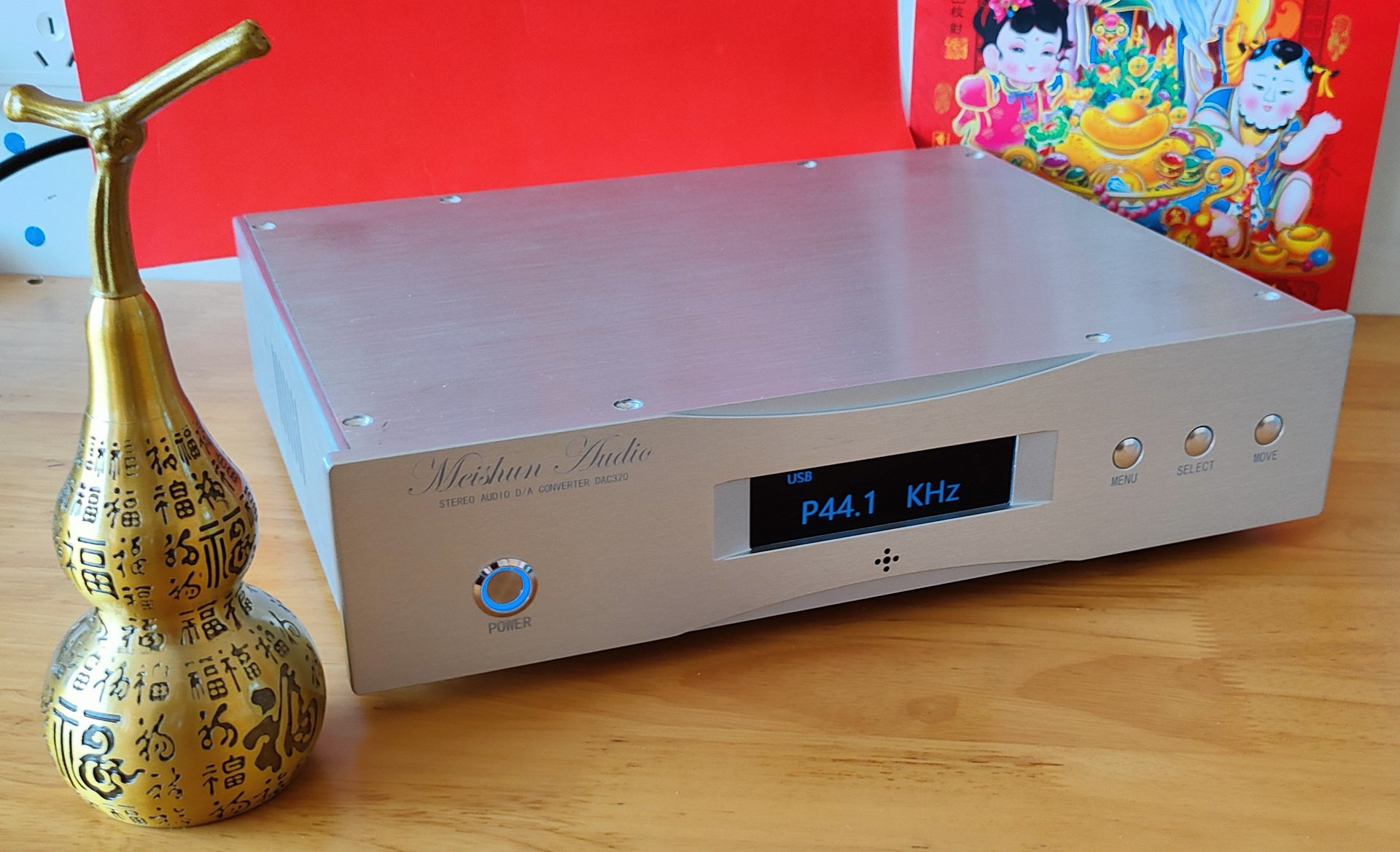
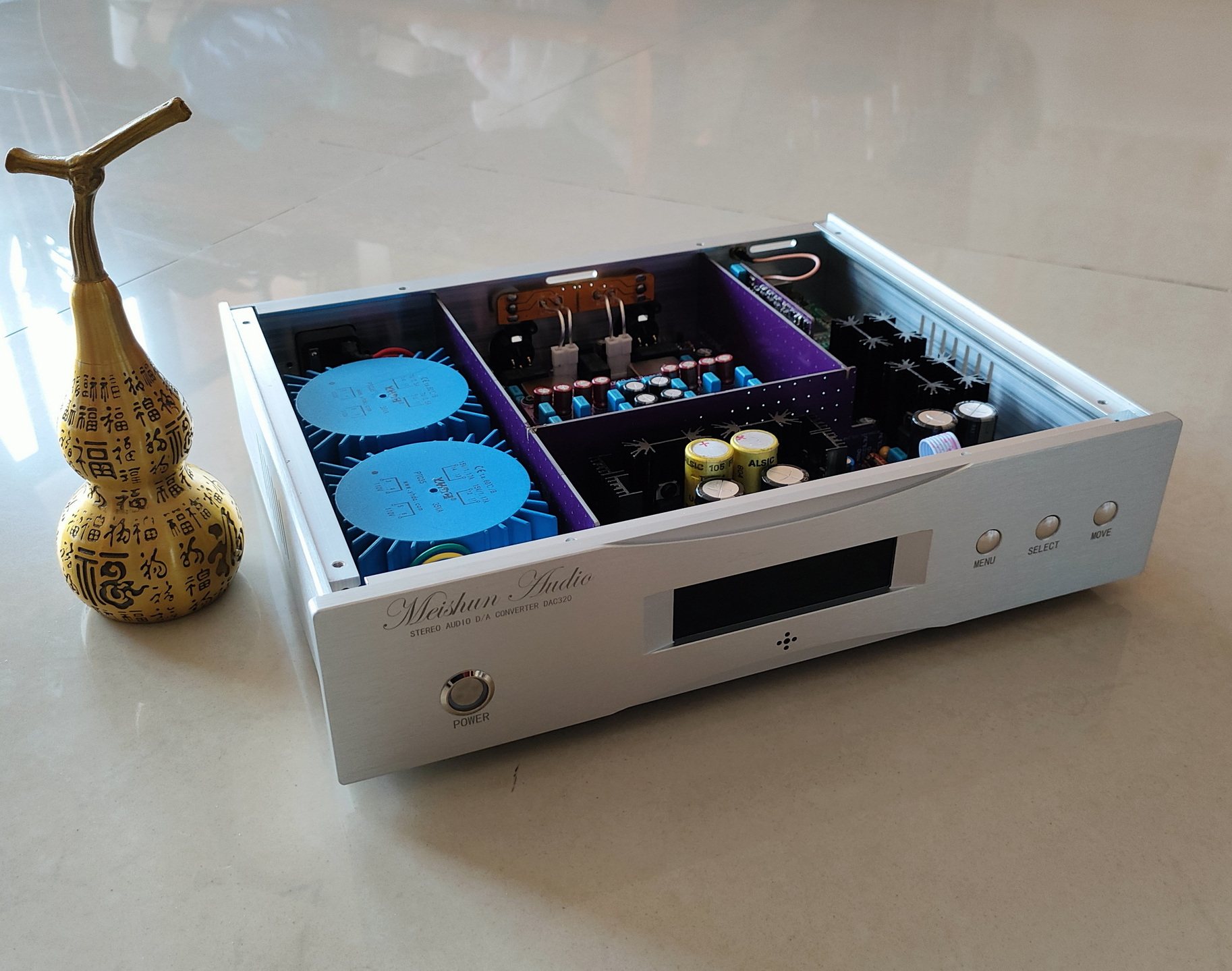
The middle part of the picture is the PCM1794x4 chip board, with four small red electrolytic capacitors on each of the left and right channels. They are ELNA Cerafini red robe capacitors, which were purchased from the original sound company more than ten years ago and are now out of print. They are sold at high prices on Taobao. The Cerafini series uses mica powder ceramic micro particles infusion, which has a sweet sound, rich and powerful low-frequency sound, and is extremely transparent, giving the sound a dreamy effect. Cerafine is one of the top positions in ELNA's audio series, specifically designed as a capacitor for audio systems. It uses OFC oxygen free copper feet, with extremely low distortion and minimal tangent loss. The technology of injecting mica ceramic micro powder into the electrolyte has two major benefits: firstly, it increases the damping effect on external vibrations. The second is that the ceramic micro powder injected will adsorb negative ions in the electrolyte and become more active ion groups during capacitor charging and discharging, forming a thin film on the surface of the anodic oxide film, greatly improving the response speed to signals and making the sound quality purer and more transparent. However, its cost is large volume and expensive price. Voice: The sound is relatively smooth, with a warm and soft mid frequency, and a gorgeous high frequency!
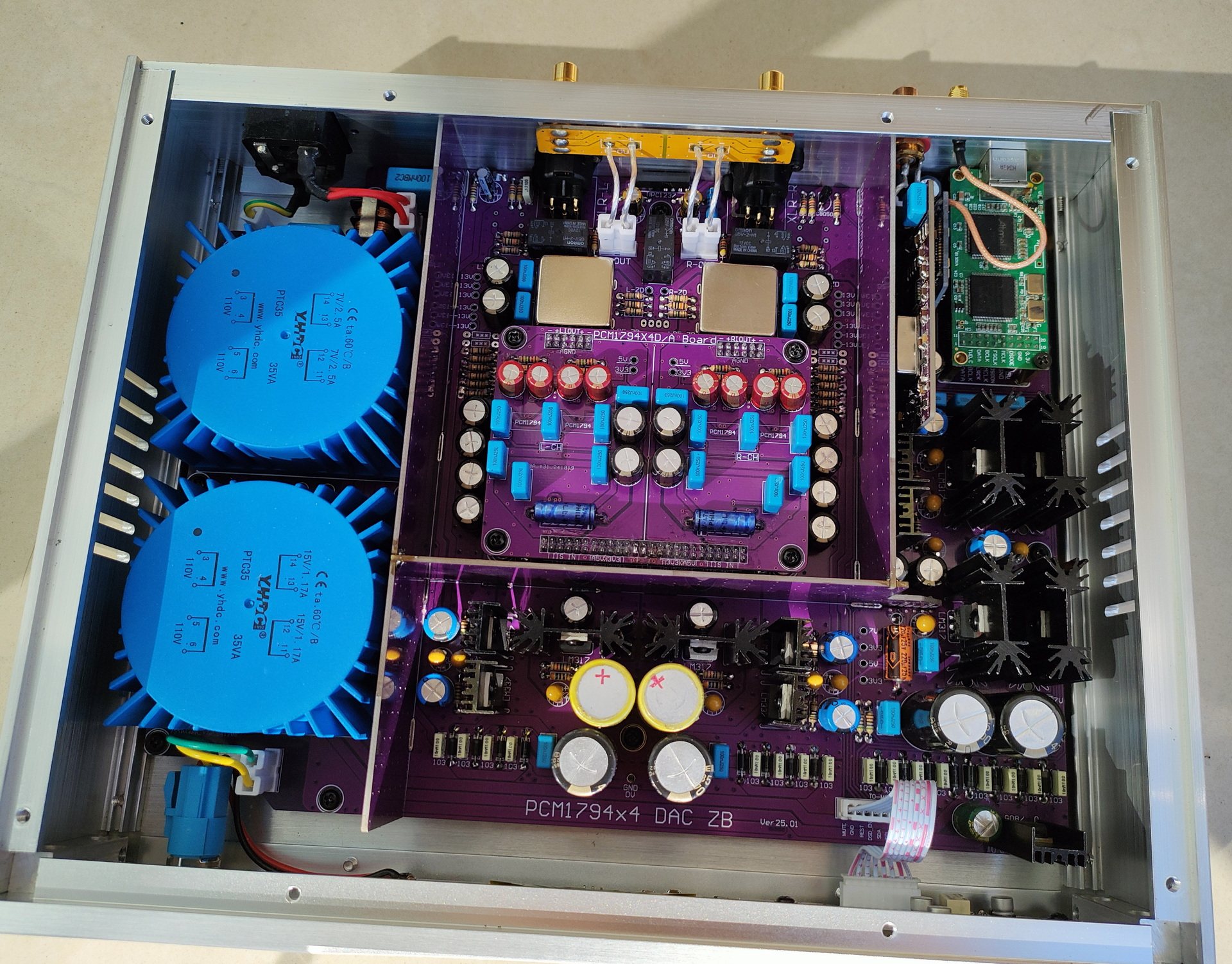
This is the internal top view of the whole machine: each part is isolated and shielded with double-sided copper PCB, which is clear at a glance! The two blue ones in the left compartment are sealed ring transformers (standard 25W, high-end 35W), which have added EMI filtering to reduce interference from the mains. In fact, 25W is enough, while the high-end version uses two 35W transformers at a higher cost, which is more sufficient for the overall performance of the machine. There is no need to upgrade any imported or branded transformers, which wastes money.
The numerical and analog parts are powered by separate transformers and rectified and filtered separately. It is crucial to design a good power supply for the decoder. The digital part of this decoder adopts secondary voltage regulation to obtain a better voltage regulation power supply. Look at the photo above, there are 13 heat sinks (6 chrysanthemum shaped, 7 small). For the independent voltage regulation of the left and right channels for good sound, there are more than 20 voltage regulation chips, including those without heat sinks. Why use so many voltage regulators? Of course, it is for the independent use of electricity by each part to facilitate the processing of their respective functions, and it is for cleanliness.
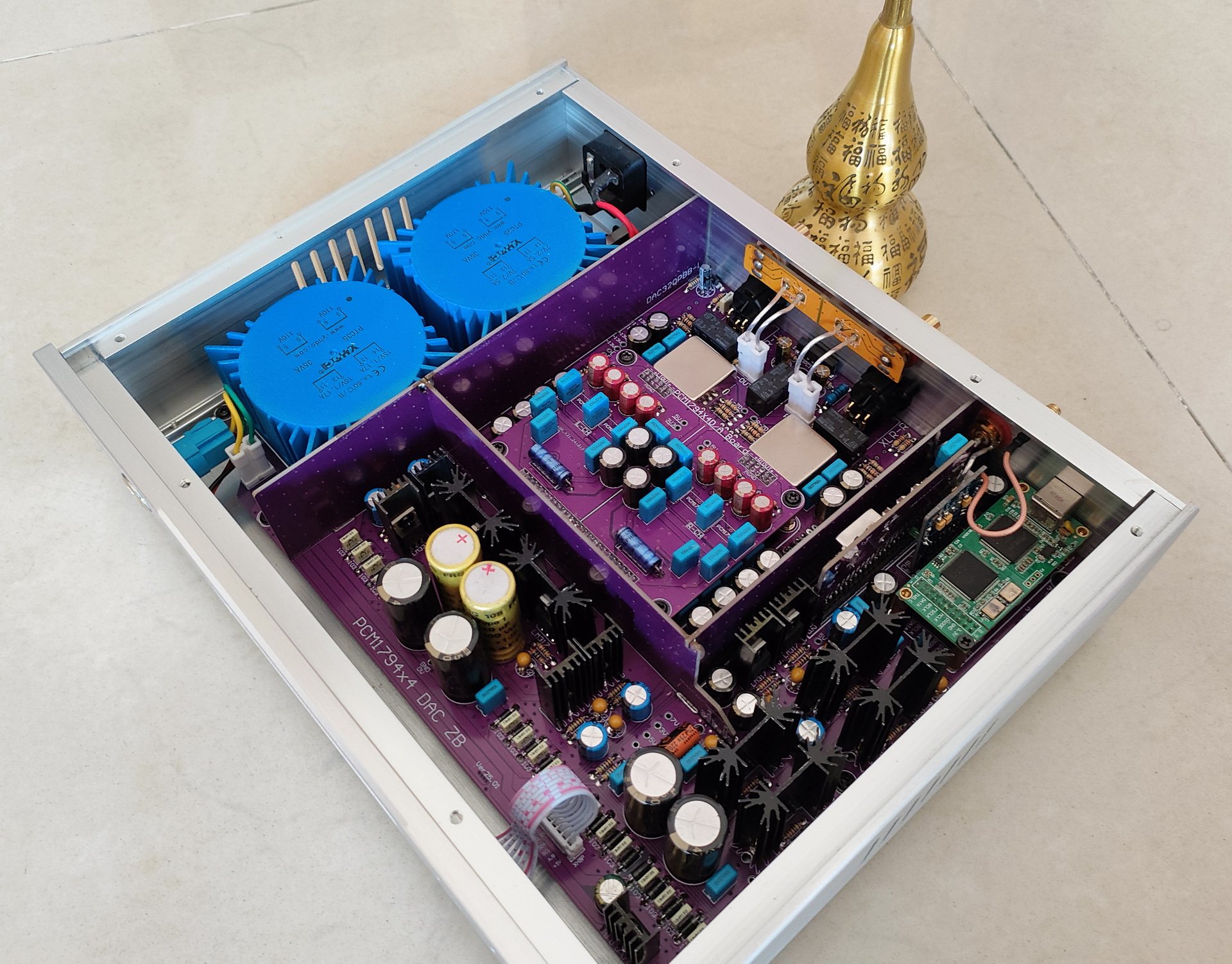
In the middle of the above picture is the main filtering capacitor ELNA4700uF * 2 of the simulation part, with two gold capacitors in parallel. The French supplement electrolytic capacitor SIC-SAFCO has a noble sound, high speed, high Ripple current, low self inductance, and low internal resistance. Low frequency diving has good elasticity and a sweet, delicate, and pure tone.
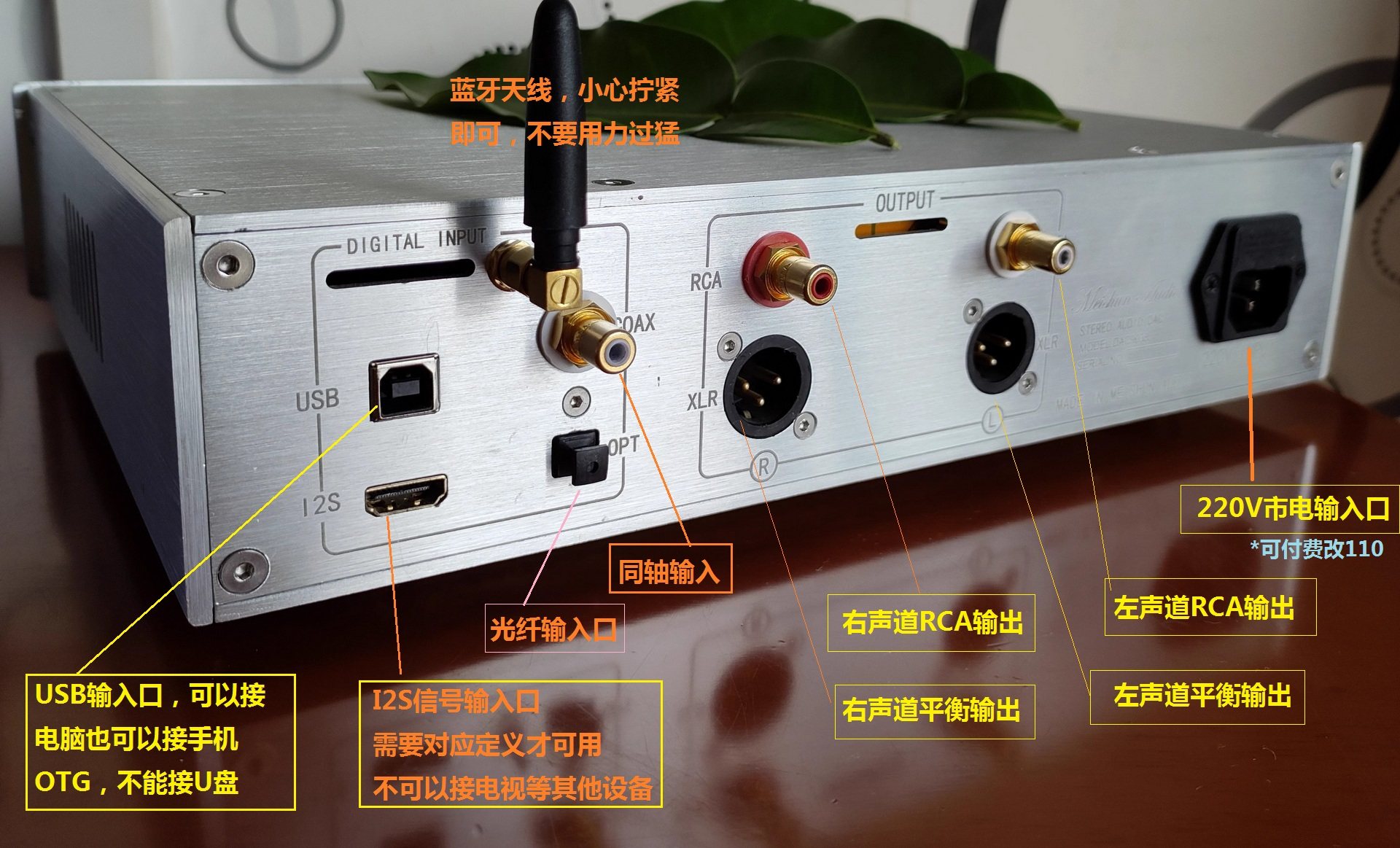
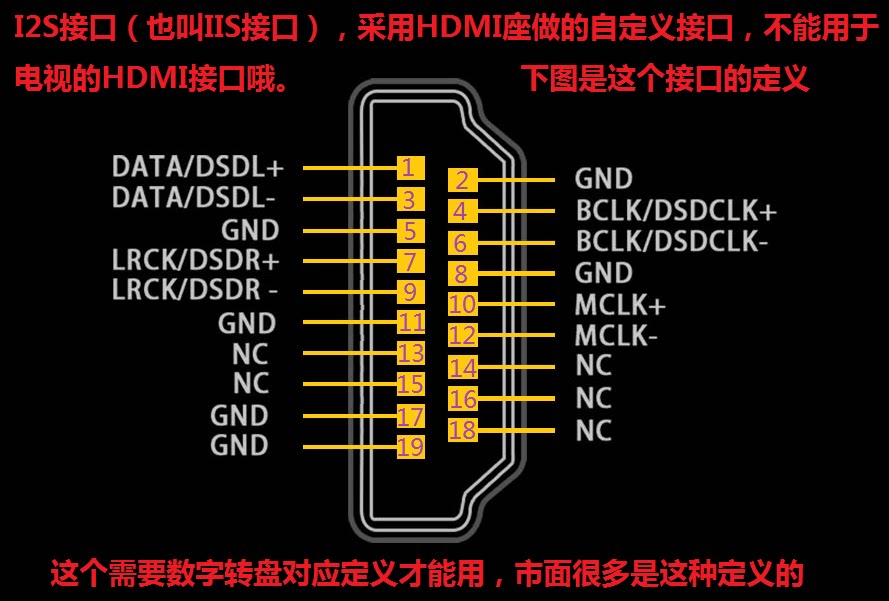
The I2S input interface in the lower left corner of the back panel is defined as follows. As long as your digital audio output port corresponds to the definition, you can connect it with an HDMI cable. NC is a floating pin and you don't need to worry about it (devices that output this interface will use the NC pin for DSD signal level recognition, so my decoder doesn't need this signal, so it just needs to be floating and doesn't need to correspond).