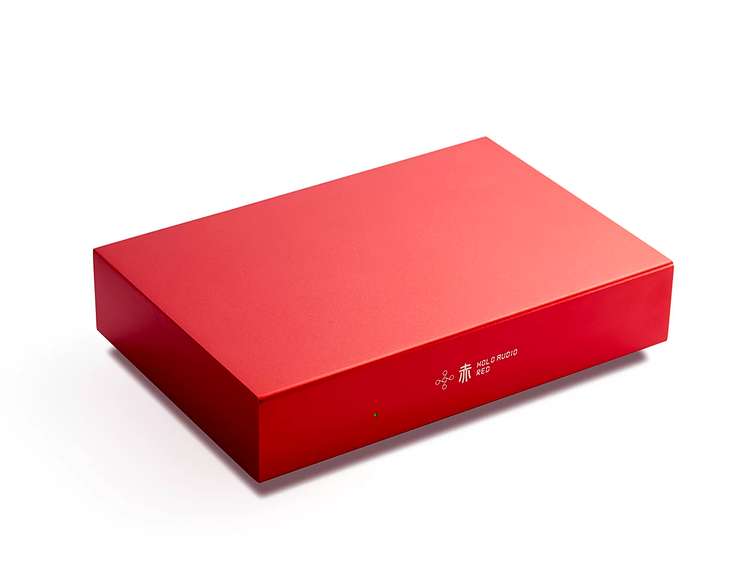
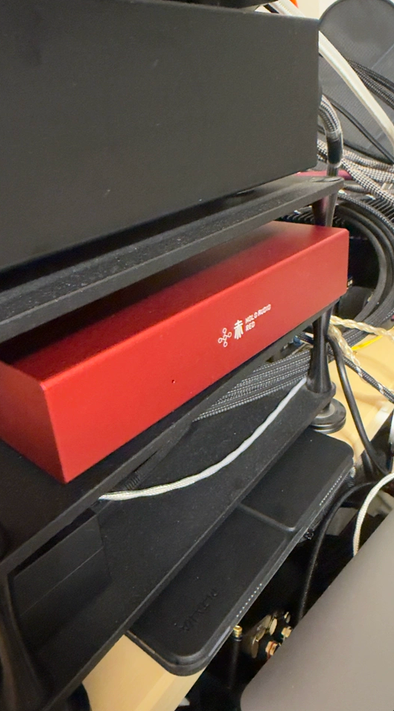
Latest HOLO Audio RED Network Player Digital Player, Based on Raspberry Pi Core Module
Notes:
1. This product is a customized product with a production period of approximately 2 weeks. Please extend the shipping date by 10 days after purchase.
2. Customized products do not accept returns without reason
Red is currently undergoing Roon Ready testing and certification. If customers who want to use Roon now can download the Ropeee system themselves. After completing the Roon Ready testing and certification, Chi will automatically push updates, and the updated system can now use Roon.
Chiding is located among users with experience and skills in using Raspberry Pi. If you are an inexperienced user, please choose carefully. We do not provide any service support on software systems. This is also why we can offer a high-quality hardware product at the current price.
Instructions for use (in Chinese): https://pan.baidu.com/s/1OuOBAxhvN_uwZqq6hGMcUQ?pwd=8888
Instructions for use (in English): https://pan.baidu.com/s/13P0jP8qWcvFwL1TXBDL98w?pwd=8888
System: https://pan.baidu.com/s/1qy8ndaKmkUrO7IRTRFY8Rg?pwd=8888
In recent years, Raspberry Pi has become popular worldwide, providing an open hardware platform that has attracted the support of numerous software developers. To this day, there are already many excellent software products to choose from on the Raspberry Pi platform. We have always wanted to create a digital player and a network player. Based on the Raspberry Pi solution, we can focus our energy and resources on hardware design, effectively control software development costs, and provide a cost-effective product to end users.
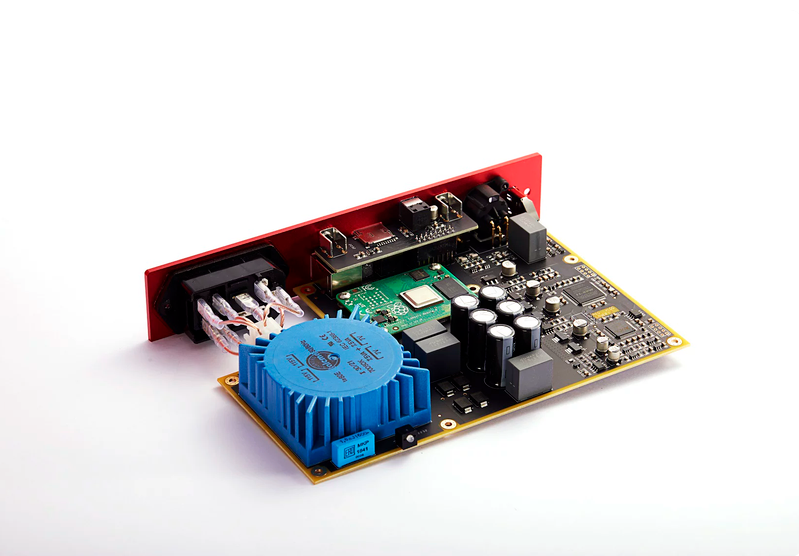
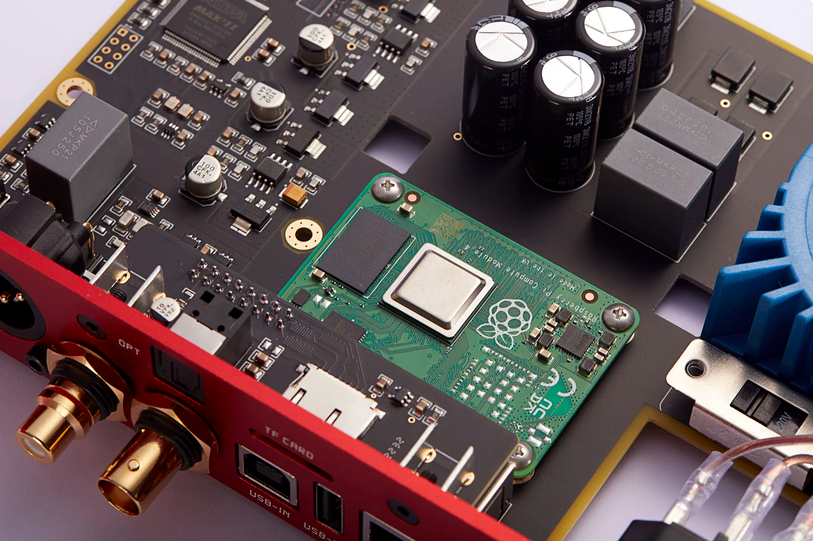
Chichi did not use ready-made Raspberry Pi boards, but only used the computing core module of Raspberry Pi Generation 4, with customized high-quality peripheral circuits and linear power provided by Chichi's motherboard. This allows Red to be compatible with Raspberry Pi software without being limited by the hardware limitations of Raspberry Pi. Take the essence and discard the dross. Become a high-quality digital player.
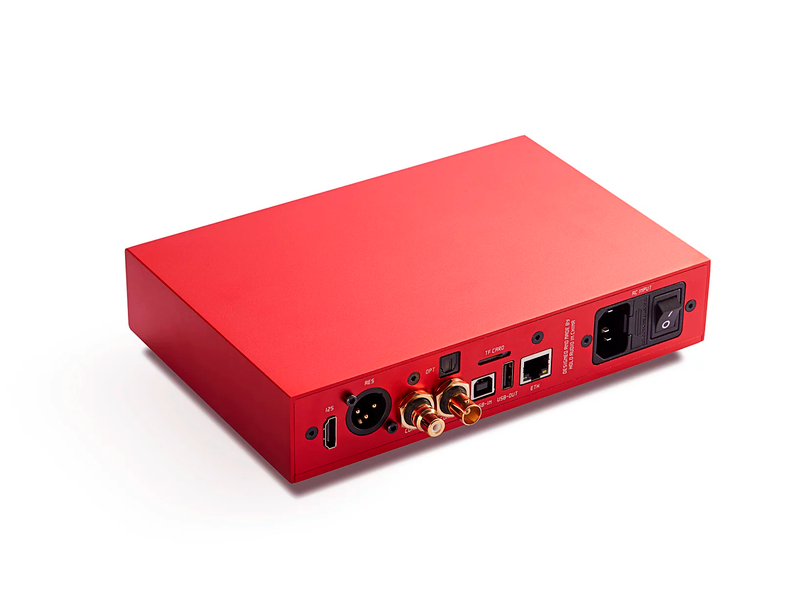
Red's output ports include USB, coaxial 1, coaxial 2, fiber optic, AES, and I2S. Among them, USB supports the highest PCM1536K and DSD1024, I2S supports the highest PCM768K and DSD512, and all other ports are the highest PCM192K and DSD64. If the decoder supports it, it is recommended to prioritize USB and I2S output. The output of I2S can be set for line sequence through the dial switch at the bottom of the chassis to be compatible with the vast majority of I2S line sequence standards on the market.
Red also comes with a USB IN port, which can be connected to a computer and used as a USB interface. In this connection state, coaxial 1, coaxial 2, fiber optic, AES, and I2S are all disconnected from the internal Raspberry Pi and controlled by an external computer. This feature makes Red's functions more diverse and flexible, but from a sound quality perspective, it is still recommended to connect to its internal Raspberry Pi via Ethernet, and let Raspberry Pi control the output of various digital ports.
The system provided by Chisuo includes the following functions, and can be upgraded online to support more functions in the future
HQPlayer NAA
UPNP
AirPlay2
Squeezelite
Dream
Spotify Connect
Tidal Connect
USB Redirector
Of course, any Raspberry Pi system can also run directly on Red, such as Mood, Volumio, piCorePlayer, etc. Just pay attention to opening the USB 2.0 port in the configuration file, specifically adding a line 'dtoverlay=dwc2, dr' in '/boot/config. txt'_ Mode=host '